ServicesGutter Covers
Gutter Covers in Summerville
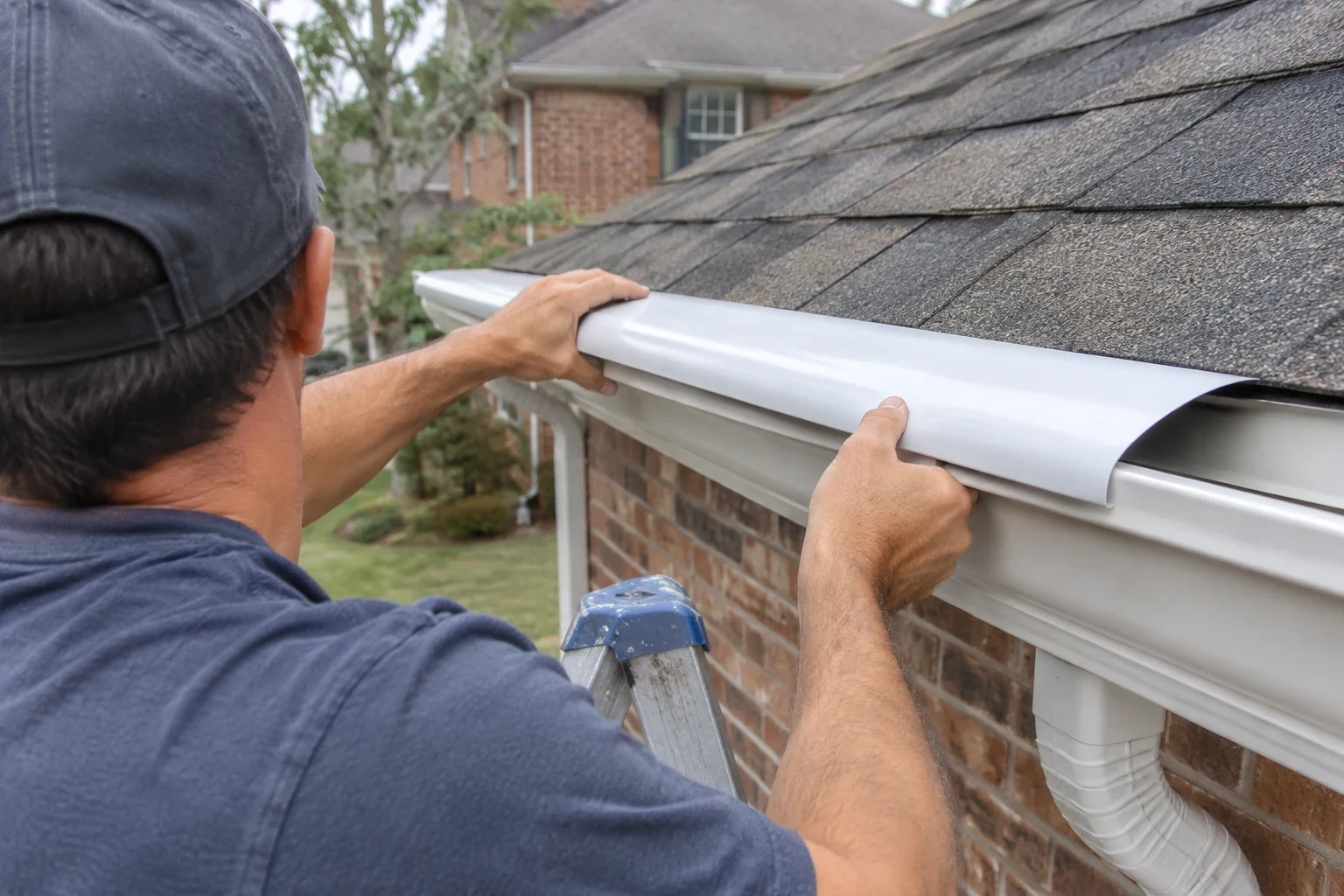
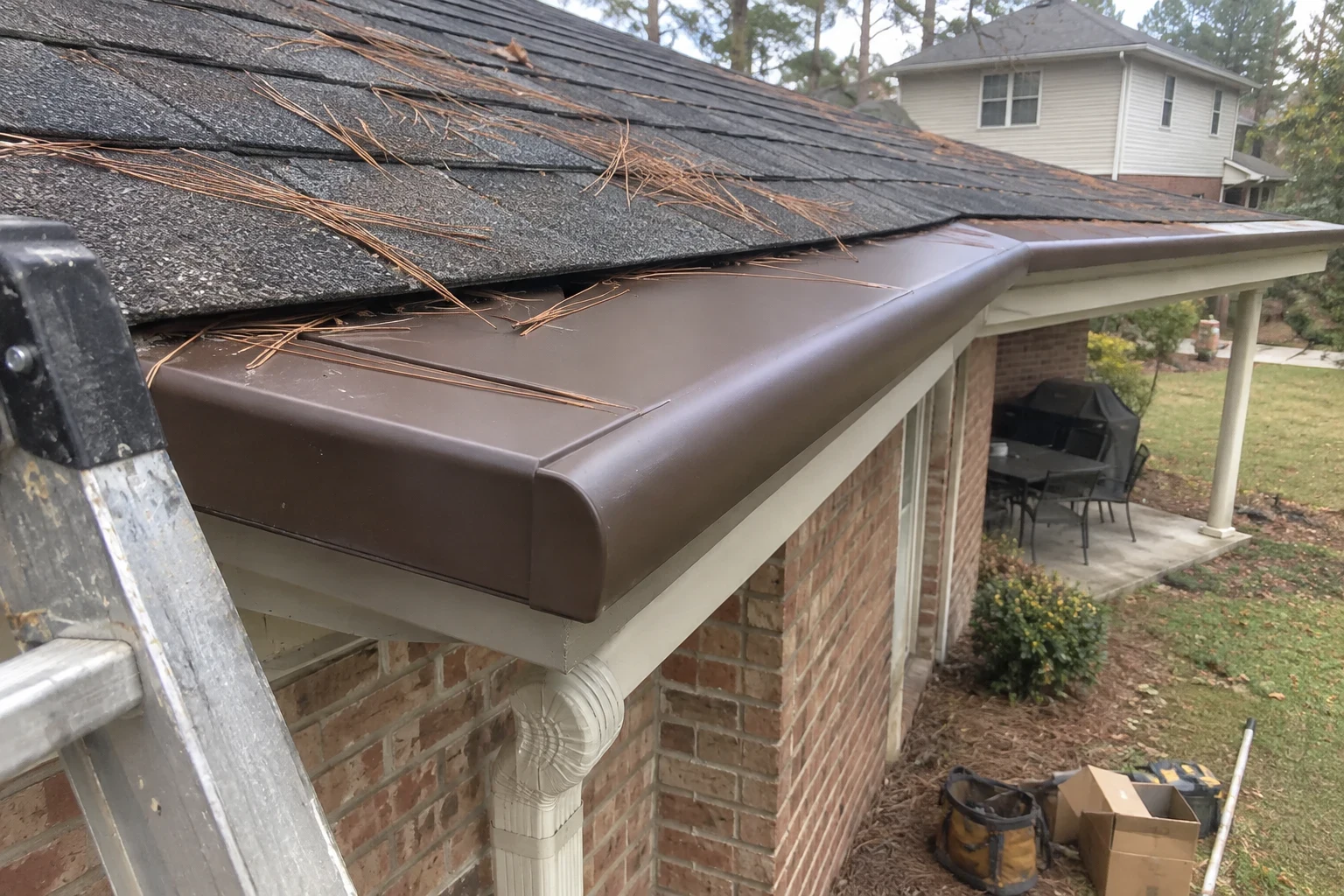
Gutter covers close the top of your gutters with a solid, curved hood. Rain wraps around the rounded front edge and drops into the trough, while leaves and pine needles slide off to the ground. We measure and fit each cover to your roofline, and one person stays with your job from estimate to cleanup.
What a gutter cover does, and when it makes sense
Covers are different from mesh gutter guards. A guard is a screen that sits over the open gutter and filters what lands on it. A cover closes the top of the trough completely and relies on surface tension. Water clings to the curved nose and turns into a slot. Leaves, seed pods and pine straw are carried past the edge and fall to the ground.
That design suits roofs under heavy pine or oak canopy, where fine needles work their way into screens and mat on top of them. It is a less natural fit for very steep roofs, or for valleys that dump a lot of water onto one short run of gutter. In those spots a guard may be the better answer, and we will say so at the estimate.
The person who walks your roofline with you is the same person you call with questions later. They schedule the crew and check the finished work.
What the work includes
- A roofline walk and measurements
- We measure each run, note the roof pitch and check how your shingles meet the gutter edge. Pitch decides which cover profile will hold water along its nose.
- A check of the gutters underneath
- A cover only works on gutters that are sound, pitched toward their outlets and firmly hung. If we find sagging sections, loose hangers or open seams, we point them out with photos. Gutter repair can happen before the covers go on.
- Covers matched to your trim
- We offer aluminum covers in colors chosen to sit quietly against your fascia and gutters. We show you samples in daylight against your house, because a color that looks right on a chip can read differently on the roofline.
- Careful fitting at the shingle line
- Each cover's rear flange either slides beneath the bottom row of shingles or is secured a little lower, whichever your roof calls for. We raise shingles gently and never drive nails through them where water could track along the fastener.
- Finished ends and corners
- Inside and outside corners are mitered and capped so the cover reads as one continuous line. Water also stays on the curve where runs meet.
- Cleanup before we leave
- Cut-offs, old fasteners and packaging are gathered from the beds and lawn. We do a final walk of the property with you.
Signs your gutters would benefit from covers
Needles packed into the trough
Pine straw mats tightly and holds water like a sponge. If you see it sprouting along the gutter line, covers will keep most of it out.
Mesh guards that clog on top
Screens can catch fine debris and pollen until water sheets over them. A solid cover gives that debris nothing to hold on to.
Water spilling over in heavy rain
When a trough is partly blocked, a summer downpour runs straight over the front edge. It can splash mud onto siding and soak the soil along your foundation.
Staining on fascia or soffit
Dark streaks or soft trim behind the gutter usually mean water has been backing up. Covers help, though rotted wood should be addressed first.
You would rather stay off the ladder
Many people choose covers simply to stop climbing up to deal with debris several times a year. That is a perfectly good reason.
How a cover installation runs
- 1
Estimate at your home
We walk the roofline together, look at the trees around the house and discuss whether covers or guards suit it better. You get a written estimate that lists each run and any repair it needs.
- 2
Scheduling and preparation
Your contact sets a date and tells you what time the crew will arrive. If gutter repair is needed, it is done first so the covers sit on a sound, properly pitched trough.
- 3
Fitting day
Most homes are finished in a single day. The crew protects planting beds under each run, sets the covers at the shingle line and finishes every corner and end cap. Then they check the pitch with a level.
- 4
Water test and walkthrough
Where it is practical, we run water from a hose along the roof to show it following the curve into the gutter. Then we walk the property with you and answer anything still on your mind.
What shapes the cost of gutter covers
Covers are priced by the length of gutter they protect, then adjusted for what the roof and the existing gutters require. We put every item in writing at the estimate, so the figure you agree to is the figure you pay.
- Total linear footage
- Longer runs mean more material and more time on the ladder. A long ranch roofline and a compact two-story home can have very different totals.
- Roof height and pitch
- Second-story eaves and steeper roofs take more setup and more care at the shingle line, which adds labor.
- Corners, valleys and transitions
- Each mitered corner and end cap is fitted by hand. A roofline with many breaks costs more than a few straight runs.
- Condition of the gutters below
- If hangers are failing or sections have lost their pitch, gutter repair is quoted as its own line. You can see what it adds before deciding.
- Cover profile and finish
- Heavier gauges and color-matched finishes cost more than basic profiles. We show you the difference side by side.
Common questions before choosing covers
Something not covered here? (843) 948-5510
Are gutter covers just another name for gutter guards?
No, they work in different ways. Guards are mesh or screen panels laid across an open trough, while covers seal the top with a solid hood and let rain curl around the rounded edge into the gutter. Under pines and heavy leaf fall, covers usually hold up better. Guards take on large volumes of water more easily. We install both and will suggest the one that suits your roof.
Will covers handle a heavy summer thunderstorm?
In very hard rain, some water can run past the nose of any cover, especially where a valley concentrates flow. We look for those spots at the estimate. A short section of guard can go on the problem area while the rest of your home gets covers.
Once covers are on, can I forget about my gutters?
Not completely, and it helps to know that going in. Fine shingle grit and some pollen still settle in the trough over the years, so a look every few years is still wise. Covers sharply reduce what gets in, but no product stops every particle.
Do my current gutters need to come down first?
Usually not. If they are firmly attached and draining toward their outlets, covers can go right on. If they sag or hold water, we will show you photos of what we found, and a repair or a new gutter installation may make more sense before covers.
Will the covers affect my roof shingles?
We fit the back edge so it works with your shingles rather than against them. We lift them carefully and avoid nailing through the roof where water could follow the fastener. If your roof is near the end of its life, we will mention it, since that changes how covers are secured.
Talk through covers with one person who stays on the job
Tell us about your roof and the trees around it. We will come out, measure, and give you a clear written answer on covers, guards or repair, with one contact from start to finish.